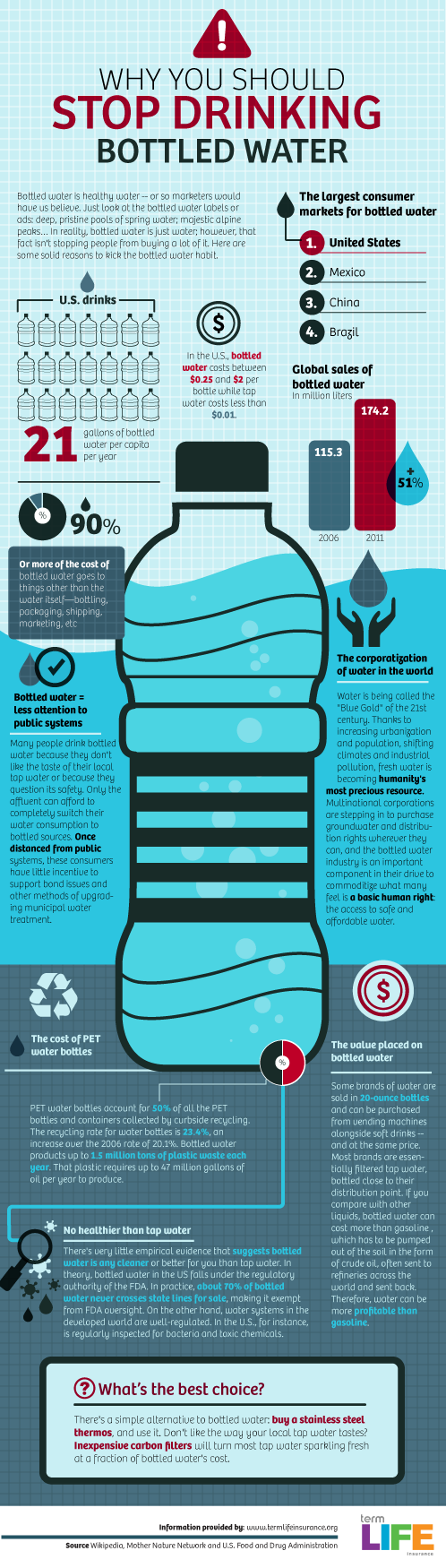
No need for bottled water
art and politics blog graphics reblog

Via: Ally Trigg
blog exhibits fashion photography reblog

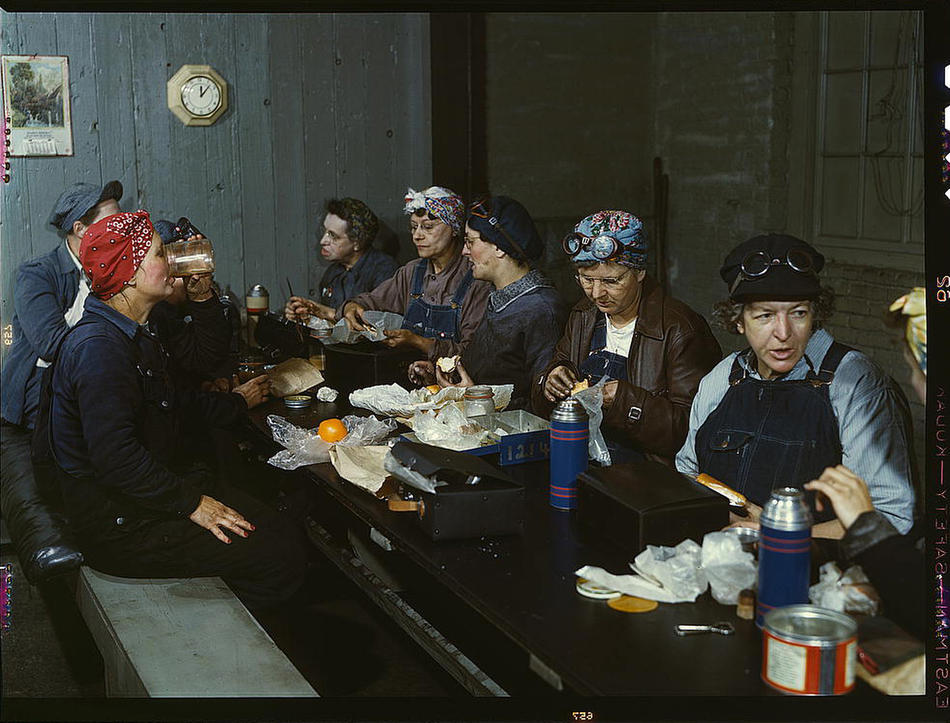
Women workers employed as wipers in the roundhouse having lunch in their rest room, Chicago and Northwest Railway Company. Clinton, Iowa, April 1943. Reproduction from color slide. Photo by Jack Delano. Prints and Photographs Division, Library of Congress
Back in 2006, the Library of Congress organized an exhibition titled Bound for Glory: America in Color that showcased little-known color images taken by photographers of the Farm Security Administration/Office of War Information (FSA/OWI).
Made from color transparencies taken between 1939 and 1943, these images change the way we see the past. I mean, there’s just so much more color. As silly as that seems to say, it makes these photos intimate and relate-able in a way that I haven’t felt before. The black and white images of this era neutralize the bright colors and patterns in the clothing, signs, and wallpaper. It makes it seem like this time wasn’t so long ago.
The photographs depict the effects of the Depression on America’s rural and small town populations, the beginning of the nation’s subsequent economic recovery and industrial growth, and the country’s great mobilization for World War II.
According to Wikipedia, these slides would have been some of the first of their time, as the chronology of the development of color transparencies look like this:
YOU CAN VIEW THE PHOTOS EASILY HERE
there is a book of these images too.
An interesting compendium put together by Art Fag City of what people are saying about what’s happening in the arts as a result of the recession.
State of the Arts TPG8 art and politics arts funding bay area blog press reblog
A followup article to the Town Hall Meeting by Angela Woodall appears today in the Oakland Tribune.
“Just mention Germany or Sweden and most U.S. artists break into a reverie (or tirade) over the kind of support their European counterparts receive from their governments. Here, surviving as an artist takes talent, a do-it-yourself attitude and the patience to hunt down funding.”
artist interviews blog others lives reblog
From Freize:
Over the last decades, the art world has become more and more professionalized. For an online-only survey, frieze asked 16 curators, writers and artists how they thought the languages, codes, education and business methods resulting from this process are affecting creative freedom. Is the art world too professionalized – or not enough?
TPG8 art and politics arts funding blog reblog
When it comes to funding for state arts agencies, California remains not-so-proudly ensconced in its customary slot — dead last — according to a report from the National Assembly of State Arts Agencies.
I’m just going to reblog here. Guest poster Jeremy Leslie on Its Nice That has a series this week on the question of “What is a Magazine?” I love this question. So here are the posts:
Celebrity Book Club: A List to End All Lists
Because, well, it’s sortof awesome.
Are "Artists' Statements" Really Necessary?
The pros and cons about that nemesis for most artists.
This to That
You tell it what you’ve got and it’ll tell you what to glue them together with.
Work of art: Online store for buyers, sellers
Not the TV show! Kelly Lynn Jones from Little Paper Planes is interviewed on her project, gives us a cheat sheet to local affordable art resources.
How to make a Daft Punk helmet in 17 months
whoa.
The Annual League of NH Craftsmen’s Fair - the Oldest Craft Fair in America
An amazing conglomerate of fine craft in Newbury, NH August 7th -15th. Check out the show and say hi to my Mom in booth 406.
Wringing Art Out of the Rubble in Detroit
Detroit doesn’t cease to fascinate me.
New Media, New Modes: On 'Rethinking Curating: Art after New Media'
Nathaniel Stern takes a look at this new book by Sarah Cook and Beryl Graham, co-editors of the CRUMB site and list (the Curatorial Resource for Upstart Media Bliss
California Legal Requirements When Selling Multiples
Good to know
Congolese Dandies
Apparently there is a new trend in the Congo: gentlemen, in both appearance and action. The Société des Ambianceurs et des Personnes Élégantes (SAPE), which roughly translates to a society of elegant people that have an ambiance about them, has a dress code restricted to 3 colors and encourages pacifism.