
Code is the New Craft by Mike Bianco
June 14th, 2010 by eleanor - blog contemporary art criticism Map (256 +128)3 TPG14
As both a curator invested in contemporary art practices, and as a potter of almost twenty years, I often find myself asking “What does ‘Craft’ mean anymore?” Craft is often considered a four-letter-word in the “big A” art world, and relished in the neo-DIY movement, but is rarely theorized anymore in relationship to our current cultural climate. As a result, I often find myself musing about the two supposedly disparate practices of “High Art” and “High Craft” and the aesthetic interconnections between them. Whenever confronted with this dichotomy I return to the seminal craft philosopher Soetsu Yanagi and his analysis of art and craft in his book The Unknown Craftsman.
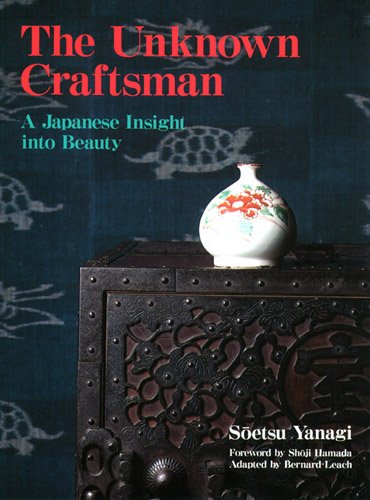
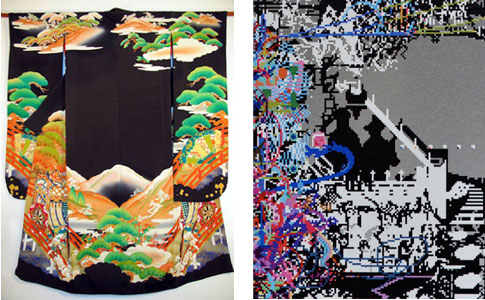 There is a new generation of artists and pattern makers engaging the structure of pattern from the post-digital viewpoint: Matthew Cella is one of them. Cella, like Yanagi, is nostalgic for the past; for the nature of his youth. The difference is the nature of Yanagi’s childhood is of rice paddies and Mt. Fuji, while Cella’s is comprised of similar subjects represented in the synthetic landscapes of Atari, Nintendo, and Sega. And what Cella does with digital nature is in practice no different than what Yanagi describes in the translation of an actual bamboo leaf into a pattern; he refines it into something more than the original could be. Furthermore, Cella – like Yanagi’s own desires -employs his patterns into utilitarian forms such as rugs. But the question remains: How, if at all, is Cella’s work bridging the craft/painting divide?
As programmer Charles Petzold states in Beautiful Code: “Code is just a smart kind of data – data designed to trigger processors into performing useful or amusing acts.” One could almost think of this statement in terms of weaving: code is the craft of weaving itself, and the useful act which once produced blankets and baskets, now results in the infinite cloth of pixels that our eyes scour for information. And although Yanagi saw the technological as the bondage of mankind, in what way is this ever increasing craft of code – and all of it’s resulting patterns of pixels – creating a new utilitarian form, new unknown craftsmen, and bringing us together in ways Yanagi had originally only thought possible through our interactions with ceramics and textiles?
In many textile traditions, landscape and narrative are literally woven together through the production of pattern. The socio-technological changes of our world have shifted our forms of representation, transforming our sense of landscape-narrative from the geographic to the sociological. Landscapes and histories have been replaced by networks and communities founded on the craft of code. Perhaps Cella is presenting textile traditions in a new way. Each pixel of Cella’s work represents a collaged fragment of information. It is as if he has cut up the narrative textile traditions of the Pueblo, Celts, and Akan, and haphazardly stitched them back together with the digital pop-culture of the 1980s: The result is the fragmented quilt of the post-modern world.
I wonder what could be gained from a more comprehensive melding of the arts and crafts with digital production? Perhaps Comp-Sci programs could be more experimental within arts and crafts institutions rather than liberal arts colleges and poly-technical schools. Could dot-coms be more productive if they established micro-potteries and looms for their employees rather than ping-pong tables and bi-weekly office parties? In addition to programs such as Google’s local produce initiative, could companies find a qualitative improvement in their employees and product by supporting local artisanal practices? If we accept that our lives have become chaotic and fragmented – largely due to the digitization of our reality – then the incorporation of the ephemerally digital with the haptically crafted seems like a very interesting path to follow.
.
Mike Bianco is an independent curator and artist based out of Marfa, Texas, and is the recently appointed associate curator at Ballroom Marfa. Prior to moving to Marfa, Bianco was the co-founder of Queen’s Nails Projects, an offshoot of Queen’s Nails Annex in San Francisco. In addition, Bianco is also the founder of the alternative arts space The Waypoint, in Marfa, Texas. More recently, Bianco has been focused on developing his projects The California Arts Cemetery in Lone Pine, CA., and a contemporary ceramics residency in Marfa, Texas. For more information about Bianco and his work you can visit www.biancoprojects.com
There is a new generation of artists and pattern makers engaging the structure of pattern from the post-digital viewpoint: Matthew Cella is one of them. Cella, like Yanagi, is nostalgic for the past; for the nature of his youth. The difference is the nature of Yanagi’s childhood is of rice paddies and Mt. Fuji, while Cella’s is comprised of similar subjects represented in the synthetic landscapes of Atari, Nintendo, and Sega. And what Cella does with digital nature is in practice no different than what Yanagi describes in the translation of an actual bamboo leaf into a pattern; he refines it into something more than the original could be. Furthermore, Cella – like Yanagi’s own desires -employs his patterns into utilitarian forms such as rugs. But the question remains: How, if at all, is Cella’s work bridging the craft/painting divide?
As programmer Charles Petzold states in Beautiful Code: “Code is just a smart kind of data – data designed to trigger processors into performing useful or amusing acts.” One could almost think of this statement in terms of weaving: code is the craft of weaving itself, and the useful act which once produced blankets and baskets, now results in the infinite cloth of pixels that our eyes scour for information. And although Yanagi saw the technological as the bondage of mankind, in what way is this ever increasing craft of code – and all of it’s resulting patterns of pixels – creating a new utilitarian form, new unknown craftsmen, and bringing us together in ways Yanagi had originally only thought possible through our interactions with ceramics and textiles?
In many textile traditions, landscape and narrative are literally woven together through the production of pattern. The socio-technological changes of our world have shifted our forms of representation, transforming our sense of landscape-narrative from the geographic to the sociological. Landscapes and histories have been replaced by networks and communities founded on the craft of code. Perhaps Cella is presenting textile traditions in a new way. Each pixel of Cella’s work represents a collaged fragment of information. It is as if he has cut up the narrative textile traditions of the Pueblo, Celts, and Akan, and haphazardly stitched them back together with the digital pop-culture of the 1980s: The result is the fragmented quilt of the post-modern world.
I wonder what could be gained from a more comprehensive melding of the arts and crafts with digital production? Perhaps Comp-Sci programs could be more experimental within arts and crafts institutions rather than liberal arts colleges and poly-technical schools. Could dot-coms be more productive if they established micro-potteries and looms for their employees rather than ping-pong tables and bi-weekly office parties? In addition to programs such as Google’s local produce initiative, could companies find a qualitative improvement in their employees and product by supporting local artisanal practices? If we accept that our lives have become chaotic and fragmented – largely due to the digitization of our reality – then the incorporation of the ephemerally digital with the haptically crafted seems like a very interesting path to follow.
.
Mike Bianco is an independent curator and artist based out of Marfa, Texas, and is the recently appointed associate curator at Ballroom Marfa. Prior to moving to Marfa, Bianco was the co-founder of Queen’s Nails Projects, an offshoot of Queen’s Nails Annex in San Francisco. In addition, Bianco is also the founder of the alternative arts space The Waypoint, in Marfa, Texas. More recently, Bianco has been focused on developing his projects The California Arts Cemetery in Lone Pine, CA., and a contemporary ceramics residency in Marfa, Texas. For more information about Bianco and his work you can visit www.biancoprojects.com
There is a new generation of artists and pattern makers engaging the structure of pattern from the post-digital viewpoint: Matthew Cella is one of them. Cella, like Yanagi, is nostalgic for the past; for the nature of his youth. The difference is the nature of Yanagi’s childhood is of rice paddies and Mt. Fuji, while Cella’s is comprised of similar subjects represented in the synthetic landscapes of Atari, Nintendo, and Sega. And what Cella does with digital nature is in practice no different than what Yanagi describes in the translation of an actual bamboo leaf into a pattern; he refines it into something more than the original could be. Furthermore, Cella – like Yanagi’s own desires -employs his patterns into utilitarian forms such as rugs. But the question remains: How, if at all, is Cella’s work bridging the craft/painting divide?
As programmer Charles Petzold states in Beautiful Code: “Code is just a smart kind of data – data designed to trigger processors into performing useful or amusing acts.” One could almost think of this statement in terms of weaving: code is the craft of weaving itself, and the useful act which once produced blankets and baskets, now results in the infinite cloth of pixels that our eyes scour for information. And although Yanagi saw the technological as the bondage of mankind, in what way is this ever increasing craft of code – and all of it’s resulting patterns of pixels – creating a new utilitarian form, new unknown craftsmen, and bringing us together in ways Yanagi had originally only thought possible through our interactions with ceramics and textiles?
In many textile traditions, landscape and narrative are literally woven together through the production of pattern. The socio-technological changes of our world have shifted our forms of representation, transforming our sense of landscape-narrative from the geographic to the sociological. Landscapes and histories have been replaced by networks and communities founded on the craft of code. Perhaps Cella is presenting textile traditions in a new way. Each pixel of Cella’s work represents a collaged fragment of information. It is as if he has cut up the narrative textile traditions of the Pueblo, Celts, and Akan, and haphazardly stitched them back together with the digital pop-culture of the 1980s: The result is the fragmented quilt of the post-modern world.
I wonder what could be gained from a more comprehensive melding of the arts and crafts with digital production? Perhaps Comp-Sci programs could be more experimental within arts and crafts institutions rather than liberal arts colleges and poly-technical schools. Could dot-coms be more productive if they established micro-potteries and looms for their employees rather than ping-pong tables and bi-weekly office parties? In addition to programs such as Google’s local produce initiative, could companies find a qualitative improvement in their employees and product by supporting local artisanal practices? If we accept that our lives have become chaotic and fragmented – largely due to the digitization of our reality – then the incorporation of the ephemerally digital with the haptically crafted seems like a very interesting path to follow.
.
Mike Bianco is an independent curator and artist based out of Marfa, Texas, and is the recently appointed associate curator at Ballroom Marfa. Prior to moving to Marfa, Bianco was the co-founder of Queen’s Nails Projects, an offshoot of Queen’s Nails Annex in San Francisco. In addition, Bianco is also the founder of the alternative arts space The Waypoint, in Marfa, Texas. More recently, Bianco has been focused on developing his projects The California Arts Cemetery in Lone Pine, CA., and a contemporary ceramics residency in Marfa, Texas. For more information about Bianco and his work you can visit www.biancoprojects.com















This is a convincing connection between digitization (new) and pattern (old), be it natural or fabricated.
The cross-disciplinary references are valuable.
How does Yanagi connect with the Brit William Morris?
How about expanding this important idea of code…does code mask the truth, or imply it? Or, better yet, deconstruct it so that it is more comprehensible?
Super.