Interview with Matthew Cella and Studio Photos
artist interviews blog Map (256 +128)3 TPG14

artist interviews blog Map (256 +128)3 TPG14

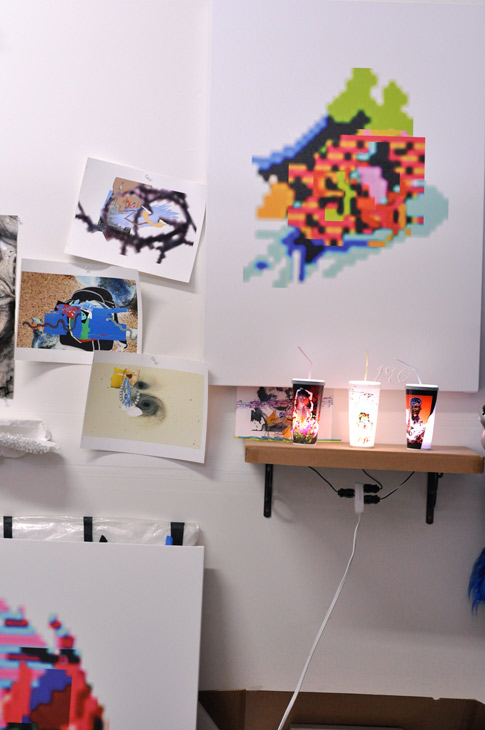
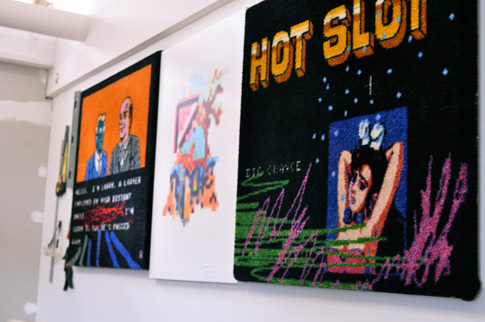
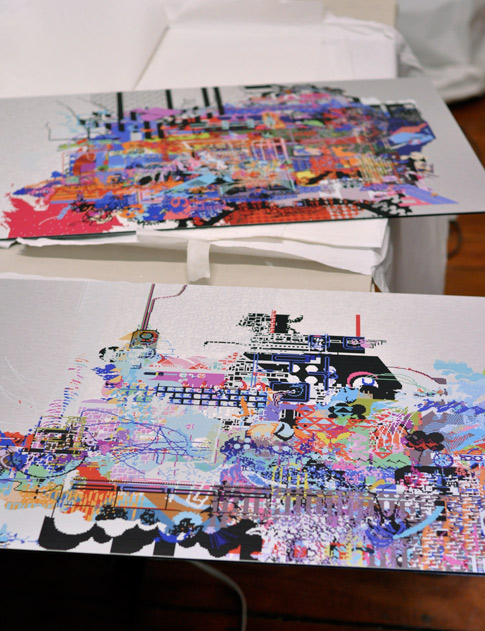
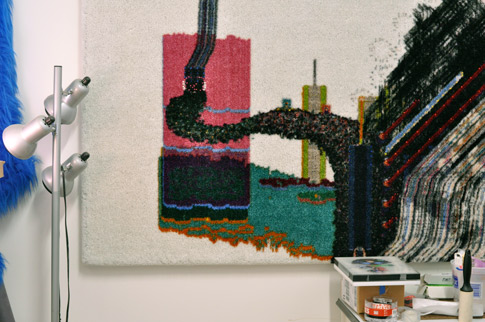
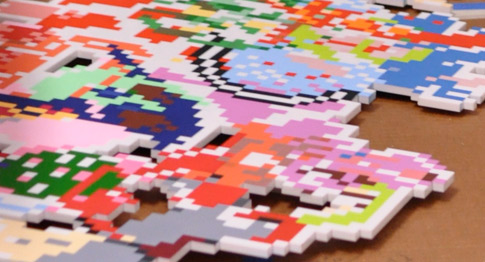
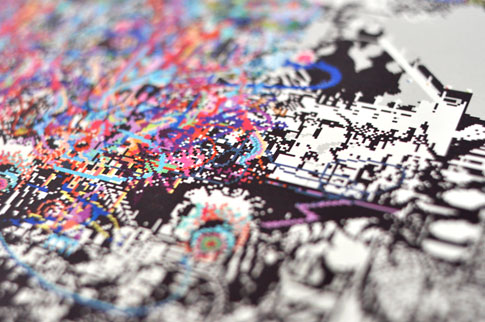
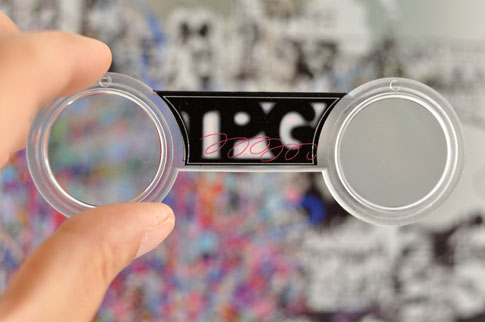
Map(256+128)3 is an edition of 69 UV prints on brushed anodized aluminum accompanied by 3D viewing glasses. Created by Matthew Cella, Map(256+128)3 presents a densely colored pixelated landscape that reveals a hidden multi-layered, twinkling world when viewed through the glasses. There are five “golden tickets” within the edition; they are printed on a golden aluminum alloy instead of the regular silver. The recipients of these five are subject to another treat from the artist.
Matthew Cella fabricates multi-media works that are the product of digitally collaged .;::’til;ps and //??>s. Born in 1981, he received his MFA from the San Francisco Art Institute, and currently lives and works in San Francisco.
bay area blog others lives quotes
This quote was found in the Berkeley Rep program for In the Wake by Lisa Kron, which, incidentally, is one of the best plays I have seen in some time. Go see it!
Chad Jones sat down with Susan Medak on her 20 year anniversary as Berkeley Rep’s Managing Director. This quote resonated strongly with us because we think along the same lines about the work we produce, the context we provide, and the subscribers that provide the support for it to all happen.
Why do you think you and Berkeley Rep have worked so well together? “If we have been successful, it’s been in part because we produce what we care about, and what we care about turns out to be an aesthetic that is shared by our community. This formula wouldn’t work in every community. We’re in Berkeley, in the Bay Area, and that gives us a certain license to do the kind of work we do. We have taken responsibility for building an audience and bringing that audience along with us. We’ve taken a lot of responsibility for helping audiences enjoy the work as much as we do. Context is all- and that’s my philosophy about everything. The more context we can provide, the richer the audience’s experience. Our audiences are intelligent and thoughtful, and we have a lot of respect for them. “
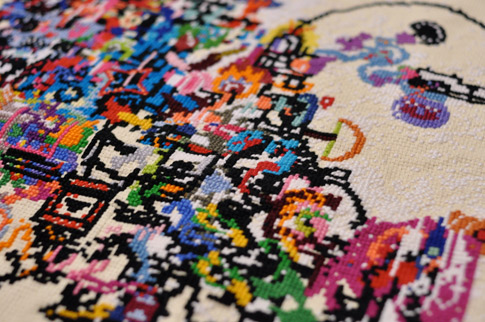
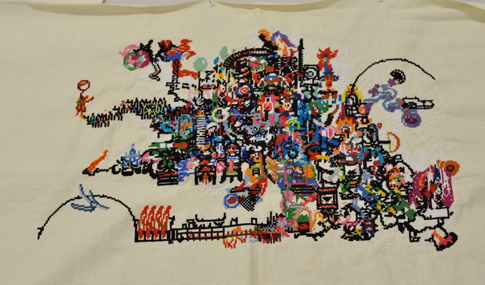
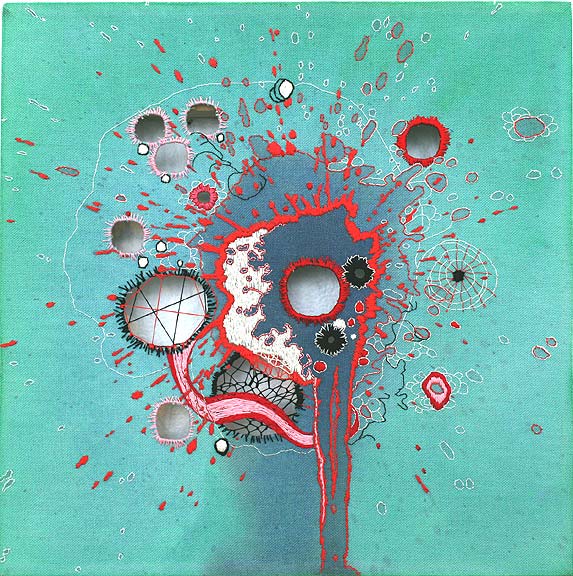
Nava Lubelski was born and raised in NYC and is living currently in Asheville, NC. Her work explores the contradictions between the impulse to destroy and the compulsion to mend. She scrambles expressions of aggression with masochistic patience and sublimation and she plays with the feminine through the graphic form of the “stain” and lace inlays.
Lubelski’s work has been shown at the Museum of Arts & Design, the Weatherspoon Art Museum, the Queens Museum of Art, and in galleries worldwide. She was a featured artist in the book Contemporary Textiles: The Fabric of Fine Art, 2008 and she has received grants from The Pollock-Krasner Foundation and the New York Foundation for the Arts.
art world artist interviews blog
art meets design bay area blog outside
art world blog new models reading list
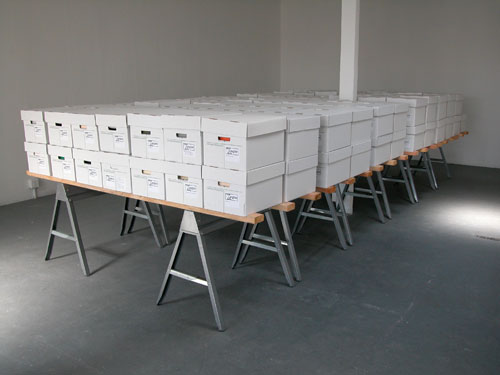
New Langton Arts’ Archive for Sale: A Sacrificial Act by Tercerunquinto (a collaborative group), 2008
Thinking about new models of funding and new ways that the art world could work is not new. But recently, whether because the economic climate has forced us to rethink our methods, or simply because it’s time in some larger cycle, there has been not only a birth of new models of funding art projects, but also a lot of writing and energy about it.
Part of this effort is simply to understand what is happening now and in the past. The Art Spaces Archive Project is a non-profit initiative to help preserve, present, and protect the archival heritage of living and defunct for- and not-for-profit spaces of the “alternative” or “avant-garde” movement of the 1950s to the present throughout the United States. The California Cultural Data Project is an online data reporting system that was created to produce a variety of reports designed to help increase management capacity, identify strengths and challenges and inform decision-making for California’s Cultural Institutions.
But the other part is writing about and archiving what is being borne out now. This is a list of some of the writing I’ve come across in the past month that works towards an understanding of how the funding mechanisms are changing in the art world, envisions how it could be, and starts to catalog the new efforts and models that are emerging today.
How Things Work by Aimee Le Duc, Art Practical Part 1, Part 2, Part 2 cont. Le Duc investigates the trajectory of more established art spaces in SF, their success or failure, and follows up with a look at new spaces/organizations are utilizing hybrid models of funding and programming.
A Catalog of Strategies, Proximity Magazine #7, Summer 2010 The Catalog is a special annotated directory of inspirational groups, organizations, projects, and individuals from around the world. With over 350 entries the directory features the best practices and celebrated failures of interventionist art practitioners.
Survival Strategies for the Arts, on Blue Avocado, 2009 Though aimed at non-profits, the thinking behind these strategies applies to everyone. John Killacky, artist and arts funder, not only knows that we need the arts now more than ever, but gives us ten survival strategies for arts organizations and one for audience members — and reminds us that all of us are audience members.
Project Space Survival Strategies: a research project by the artist Elysa Lozano for Autonomous Organization, produced in collaboration with Invisible Venue. I found this idea especially striking: “The motivations behind these initiatives are inextricably linked to the manner of funding them. What constitutes an acceptable way to get funding is as much a question of the integrity of the intention as it is a question of survival.”
Art Infrastructure, cmagazine 103, Autumn 2009 A bunch of articles discussing exhibition strategies and platforms that provide alternative models for how art is exhibited and experienced by its viewers. If we take the idea from Lozano (above,) then these alternative models would inevitably be thinking of new funding models as well.
Try as I may I was unable to get him to understand the sadness I felt when looking into the depth of a Rothko, but it kept comming back to the Abramovic performance. He would go to the window… look, and then comment again on how pointless the whole thing was. Over, and over. I finally had to say, “I don’t care how you feel about it. The point is that you feel something. You keep looking, you keep talking about it. Isn’t that what art is about? To convey an emotion, to make you participate in an experience?” He didn’t know. All I could do was shake my head.
blog contemporary art criticism
Lego Hello World
I wish all my printers were made of legos.
LIFE photo archive hosted by Google
Images from Life Magazine going back to 1860’s, hosted by Google
Coming Face To Face With The President
Well crafted story about an under-heard point of view.
In California, Pot Is Now an Art Patron
A new funding source for the arts – reaping big rewards and funding many projects. It’s pot.
Notes on Portraiture in the Facebook Age
Celebrity Book Club: A List to End All Lists
Because, well, it’s sortof awesome.
Are "Artists' Statements" Really Necessary?
The pros and cons about that nemesis for most artists.
This to That
You tell it what you’ve got and it’ll tell you what to glue them together with.
Work of art: Online store for buyers, sellers
Not the TV show! Kelly Lynn Jones from Little Paper Planes is interviewed on her project, gives us a cheat sheet to local affordable art resources.