Oliver and I are thinking about fiscal sponsorship for TPG again and this time around we’re trying to learn as much as possible about the process before we invest our time in applying. I thought I would share what we’ve learned about how it works and what one should think about in choosing/applying for fiscal sponsorship.
$$$$$$$$$$
1. What is it?
Fiscal Sponsorship allows organizations, individual artists, projects, or companies that have a non-profit mission to align themselves with a designated 501c(3) non profit organization and apply for grants and accept donations under their umbrella.
Why do people do it?
Many times it is simply too costly or time consuming for fledgling organizations or projects to set up legal non-profits. Fiscal Sponsorship allows organizations to learn the ins and outs of grant writing and test out whether a non-profit structure is a good fit for them. Sponsoring Organizations can create a bigger impact when multiple projects are pursuing their mission. They can also mentor and assist smaller organizations who may grow up to be big kid non profits. ..And I’m pretty sure some of the organizations see the profit they make through their administrative fees as a plus. This is more the case when they have over 50 sponsored projects (
Tides Center, Fiscal Sponsorship Field Scan, pg10.) I’m not knocking them; they are providing a valuable service for projects that otherwise wouldn’t be able to get grants and it does take time and work to oversee the sponsored projects.
2. Different Financial/Legal Models
There are different ways that fiscal sponsorships are legally set up. According to
“Fiscal Sponsorship: 6 Ways to do it right” by Gregory Colvin, the three most widely used fiscal sponsorship models are:
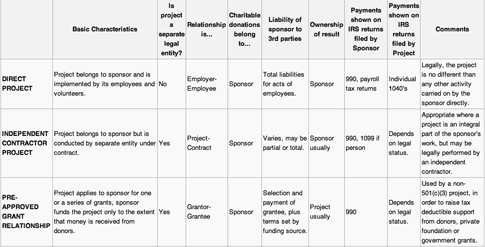
Model A: Direct Project
In this model, the Sponsoring Organization assumes all legal and fiduciary responsibility for the project. The sponsored project becomes, in essence, part of the sponsoring organization. The sponsoring organization maintains control over the project and all funds that pass through the project, not just funds that are donated to the project. Often in these cases the sponsoring organization takes care of payroll, benefits, and disbursement of all money. As they are responsible for the project, they may weigh in and have control over the direction of the project as a whole.
Model B: Independent Contractor Project
In an Independent Contractor relationship, the Sponsoring Organization still usually has ownership of the results of the project, but the project itself is treated as a separate legal entity. The organization, in essence, is contracting the project to do its work for them. The “work” I am talking about is the actions of the project that fulfill the sponsor’s mission.
Model C: Preapproved Grant Relationship
A preapproved Grant Relationship is one where the sponsoring organization and the sponsored project are completely separate entities. The organization approves the granting process and the fact that the project is pursuing aims that fulfills its nonprofit mission. Once it receives the funds, it re-grants the money (less its fee) to the project. Financial and legal responsibility stays in the hands of the project.
I found
this chart on wikipedia especially helpful:
3. Fees
Most organizations charge between 5-10% of the funds that pass through them. Some will charge up to 15%, especially for government grants that have a lot of red tape to deal with. The average, according to The Tides Center, is 5.6% for non governmental grants and 7.7% for governmental grants. Most of the ones I have found in the Bay Area for Arts organizations range from 6-10%.
Some places require you to be a “member” of their organization in order to apply to be fiscally sponsored. These prices are usually up to $200/year.
4. Which organization to apply to?
The most important factor for the majority of organizations when deciding whether to sponsor a project is alignment of mission. In most cases, it simply works best for both parties and makes the most sense if the two groups share the same goals.
Though there are some national sponsors (like
Fractured Atlas or
NYFA), the second most important factor for most organizations is geographic location. A sponsored project should take location into consideration as well if they want to take advantage of non-profit sales tax exemptions. If they do, they need to be in the same state as their parent organization.
5. What can they do for you?
Every sponsor has a different program for their projects. Each offers different benefits, like advising on grant applications, legal stuff, and organizational/business development, discounts to events or classes, different promotional opportunities, different ways that they are able to accept donations (like credit card processing, monthly billing of donors, whether they can deal with non-monetary donations, etc).
They all also have different ways of handling the money. Some will cut you a check on demand, some on a regular basis, and a few have online tools to manage your account. Most will make you provide documentation for how the money is being spent. All these things are good to take into consideration when deciding who will be the right fit for you.
6. Size of their Sponsorship Program
One last thing to take into consideration is the number of projects that an individual organization sponsors. While on one hand, the larger the number the more familiar they may be with how sponsorship works and they may have more tools and benefits as a result. But on the other hand, many granting organizations and foundations will only accept one application for a specific grant per organization. When there are 2000 projects under one umbrella, the chances are higher that you may find some conflict in this area.
So! In conclusion.
Some non-profits are very cautious about fiscal sponsorship arrangements and prefer to have a lot of control over the projects in order to ensure legality. (I’ve read one critique of this process likening it to money laundering.) But some are much more laid back. It seems every organization takes their own view on how it should work. The
Tides Center sums up it’s
review of Fiscal Sponsorship practices with the view:
As evidenced by the findings of this report, the array of policies and practices
employed by fiscal sponsors is wide ranging. From large to small,
sophisticated to naïve, and focused to broad, there clearly is no “typical”
fiscal sponsor. What is clear, however, is that there is a growing number
of organizations involved in fiscal sponsorship with increasing project
loads. Few of these organizations feel confident that they are “doing it
right” and, due to the complexities of the law and tax codes, there is good
reason for that lack of confidence.
Go out and be sponsored! Maybe?
Here are some resources to find sponsors in your area.
Fiscal Sponsor Directory
National Network of Fiscal Sponsors through the
Tides Center
Foundation Center: A comprehensive listing of websites, guides, and publications about fiscal sponsorship. They also have a web video explaining fiscal sponsorship.


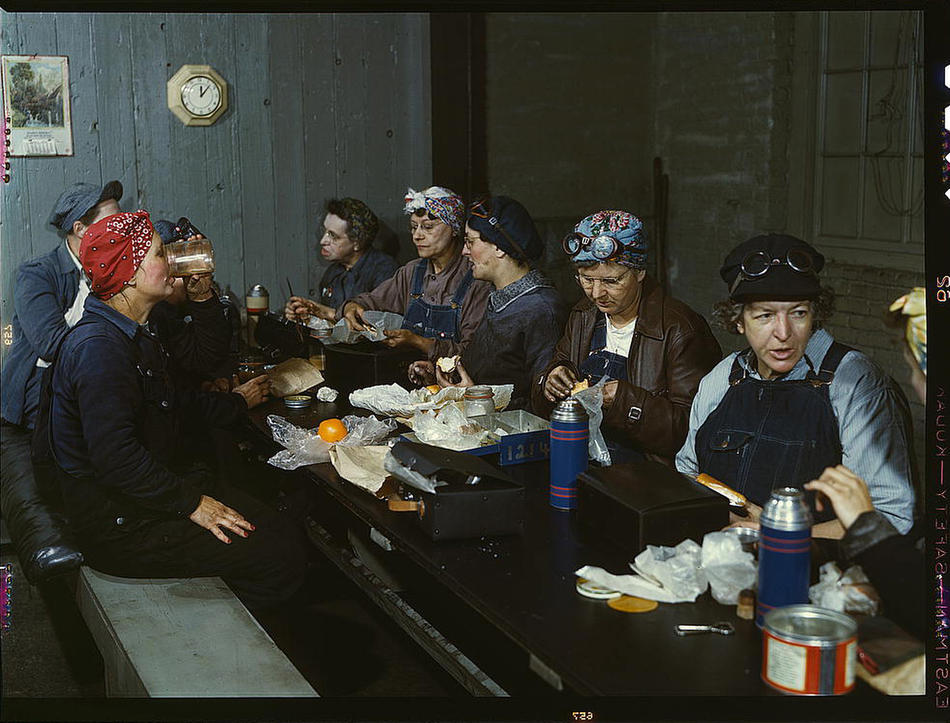 Women workers employed as wipers in the roundhouse having lunch in their rest room, Chicago and Northwest Railway Company. Clinton, Iowa, April 1943. Reproduction from color slide. Photo by Jack Delano. Prints and Photographs Division, Library of Congress


 Ann Chamberlain, Untitled Installation 2, 2006. Ink on graph paper, fifty sheets, 8.5 x 11 inches.
A two-day symposium in honor of former SFAI faculty member and artist
Ann Chamberlain, Untitled Installation 2, 2006. Ink on graph paper, fifty sheets, 8.5 x 11 inches.
A two-day symposium in honor of former SFAI faculty member and artist