Artists Unite!
art and politics art market art world arts funding bay area blog State of the Arts TPG8
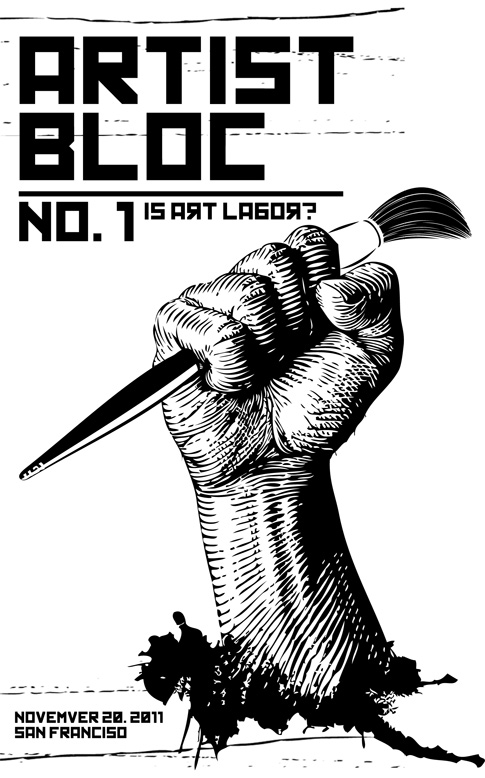

art and politics art market art world arts funding bay area blog State of the Arts TPG8
art and politics blog exhibits TPG8
 Sometimes you know projects are touching on something important at the time that you are doing them, but then they sort of quietly slide from your consciousness. Other times projects have a sort of rhizomatic quality to them, growing beneath your feet both in terms of importance and reach.
State of the Arts seems to be one of those projects. It keeps showing up in unexpected places, hanging out and creating dialogue everywhere it goes. At the end of last month, down in southern California, it was part of a show and lecture series put on by the graduate curatorial practice students in the Master of Public Art Studies Program at the USC Roski School of Fine Art.
The show description:
Sometimes you know projects are touching on something important at the time that you are doing them, but then they sort of quietly slide from your consciousness. Other times projects have a sort of rhizomatic quality to them, growing beneath your feet both in terms of importance and reach.
State of the Arts seems to be one of those projects. It keeps showing up in unexpected places, hanging out and creating dialogue everywhere it goes. At the end of last month, down in southern California, it was part of a show and lecture series put on by the graduate curatorial practice students in the Master of Public Art Studies Program at the USC Roski School of Fine Art.
The show description:
The project explores issues of artistic production and labor, and is motivated by a keen awareness of how the current economic situation applies particular pressures on the many connotations of artistic “work.” It is a crucial moment to reexamine the shifting value, both economic and cultural, of artistic labor and to explore the ways in which artists navigate, resist, and reproduce these values. Each of the participating artists in the exhibition implement distinct methodologies for transforming the economic conditions of their artistic activities: from reflections on artistic practice as labor and entrepreneurial venture; to developing practical contracts that enforce artist fee structures; to resisting the speculative art market by offering unlimited multiples; to conceptualizations of artistic service provision, among others. Beyond evidencing economic models, the exhibition aims to reveal the shifts in political and social dynamics that artists face when negotiating the conditions of production, reception, and consumption of art.
art world blog the exposure problem TPG11 TPG8
 There is a lot of talk about what artists should do to make the conditions under which they work a little bit better. We’ve been part of those talks, notably around the time that we were working on State of the Arts with Joseph delPesco. However, often those talks end with big dreams, sometimes that are just too big for anyone in the room to tackle willngly. In contrast, TPG11 artist Helena Keeffe has taken it upon herself to make a small stand for herself as an artist and the conditions she will work under. She does this by saying no.
I don’t think demonizing institutions is the answer. If I’m an advocate for any one strategy it is giving oneself permission to say no. Read more on OPENSPACE >>In her recent response to a conversation that took place at the SFMOMA, she shares the letters she has written rejecting invitations and calls to shows. Her individual campaign, where she calls on the organizers to recognize that exposure is not always enough compensation, especially for artists that are project based, has resulted in some small changes from those putting on the shows. It helps that she is very polite in her address, just sharing her point of view without demonizing those who have imposed the conditions that she is choosing to reject. In the end, most people are just trying to figure ways that these systems can support all that are involved and not bankrupt anyone. We all have blind spots until someone points them out. And sometimes small efforts like these might in the end make the most difference in creating an art world that works for everyone.
blog press State of the Arts TPG8


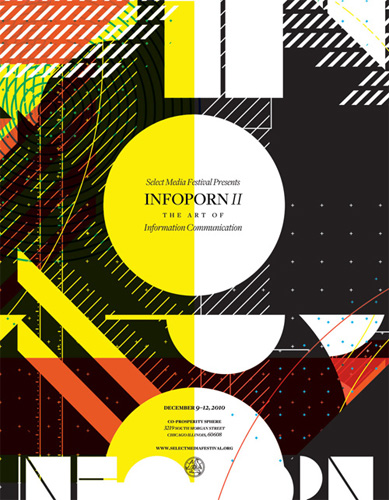 The State of the Arts posters were in this short lived show in Chicago: an homage to their love for data visualization, the show highlights a selection of works from around the world in the form of installations, a publication library, interactive projects and infographics.
art and politics bay area blog events other personal TPG8
 Sight School is pleased to host this one-night exhibition and public reading of Chicago-based collective Temporary Services’ newspaper titled, “Art Work: A National Conversation on Art, Labor and Economics.”
A handful of local artists, writers and curators including Sean Fletcher & Isabel Reichert, Lynne McCabe, Julian Meyers, Ted Purves, and Natasha Wheat will deliver public readings of texts directly from or related to the newspaper, while providing analysis and commentary in an informal reading-room environment. Readings will feature works by Chris Burden, Carolina Caycedo, Cooley Windsor & Futurefarmers, and the Guerilla Art Action Group (GAAG), among others. In addition, this event will serve as a distribution point for free printed copies of the newspaper. Participants will be encouraged contribute to the event and participate in discussion on how to build an economically viable arts community in the Bay Area.
This event will take place from 7-9pm on Wednesday December 16th.
Sight School, 5651 San Pablo Ave, Oakland CA
Sight School is pleased to host this one-night exhibition and public reading of Chicago-based collective Temporary Services’ newspaper titled, “Art Work: A National Conversation on Art, Labor and Economics.”
A handful of local artists, writers and curators including Sean Fletcher & Isabel Reichert, Lynne McCabe, Julian Meyers, Ted Purves, and Natasha Wheat will deliver public readings of texts directly from or related to the newspaper, while providing analysis and commentary in an informal reading-room environment. Readings will feature works by Chris Burden, Carolina Caycedo, Cooley Windsor & Futurefarmers, and the Guerilla Art Action Group (GAAG), among others. In addition, this event will serve as a distribution point for free printed copies of the newspaper. Participants will be encouraged contribute to the event and participate in discussion on how to build an economically viable arts community in the Bay Area.
This event will take place from 7-9pm on Wednesday December 16th.
Sight School, 5651 San Pablo Ave, Oakland CA
art and politics blog contemporary art criticism TPG8
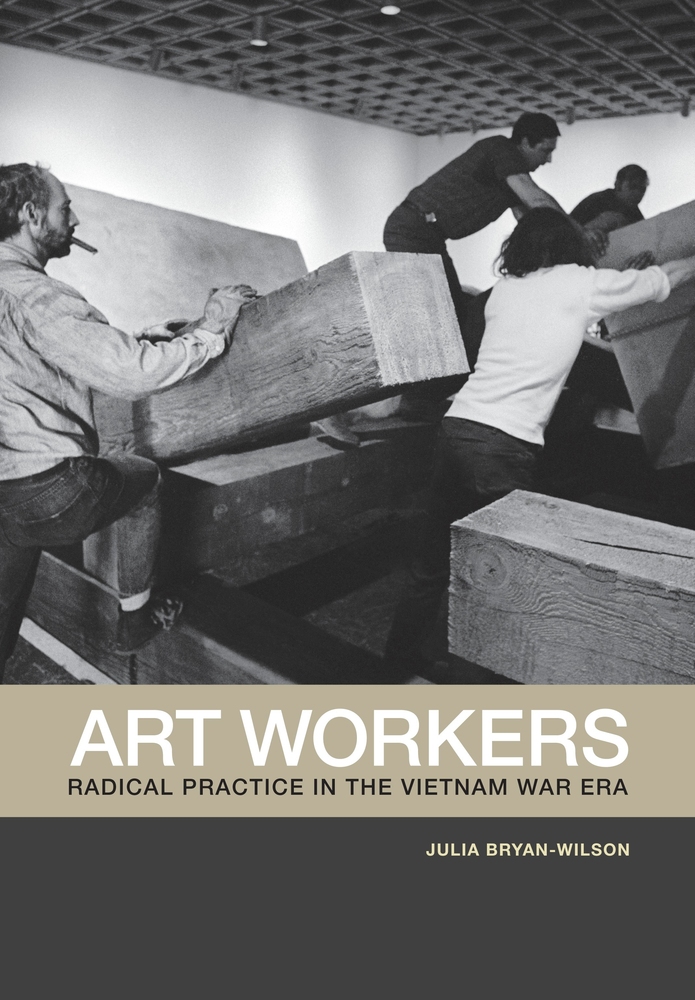 Julia Bryan-Wilson, director of the Ph.D. program in visual studies at the University of California, Irvine, investigates in her new book the movement to create a new recognition of artists as workers and laborers in the 60’s and 70’s. Their efforts created some change within the museum structure, yet it continues to be a struggle today, as seen with efforts of W.A.G.E. and our “State of the Arts” project led by Joseph del Pesco.
Julia Bryan-Wilson on Artforum.com:
Julia Bryan-Wilson, director of the Ph.D. program in visual studies at the University of California, Irvine, investigates in her new book the movement to create a new recognition of artists as workers and laborers in the 60’s and 70’s. Their efforts created some change within the museum structure, yet it continues to be a struggle today, as seen with efforts of W.A.G.E. and our “State of the Arts” project led by Joseph del Pesco.
Julia Bryan-Wilson on Artforum.com:
THE MORE INTERESTED I became in the legacies of the Art Workers’ Coalition and the New York Art Strike, the more I became concerned with how artistic labor registers––or doesn’t––within a wider field. It was both inspiring and somewhat vexing to consider how artists and critics attempted to organize as workers and label themselves as such, particularly during the Vietnam War, when debates about the value of artistic production were raging within culture and within protest politics. How does art work? This question challenged me and pushed the project forward. …read more on Artforum.comHer book has been published by University of California Press and there will be a release party at Printed Matter in NYC on November 7th.
art market blog the exposure problem TPG8
Last week I wrote about the indignation I feel when I see a company like Google wanting to use art without financially compensating the artists. The post and ensuing discussion on Facebook generated some interesting feedback, and many people expressed the concern that perhaps artists have set the bar low themselves. This got me thinking about how it is that artists begin accepting less than they are worth–and I think, unfortunately, it is because of the close collaboration that artists have with non-profit arts organizations. And this is much more difficult to get irate about. As I rail against Google for devaluing the work that artists do, I can’t help but think back on the numerous non-profit arts organizations with which I have either been involved or encountered as an artist. Non-profit organizations, those bastions of hope, those doers of good, whose belief in the arts propels us through the darkest hours of our economic crises, are they immune to the tirade I so readily unleashed on Google?
Click here to keep reading on Technology in the Arts
I’m glad to see people talking about this issue. I too find it an almost impossible conundrum. But discussion is good. What about you, the great wide internet world? Have you found any examples of nonprofits recognizing this issue and changing the way that they do things so that they start paying the artists they show? Or does the answer lie outside of the non-profit world, in the shall we say, “no-profit” or “not-for-profit” world? There are people rethinking, but most of what I have seen comes from this latter world. There will also always people who want to get their work out for free for a time. It’s like internships. I never understood all the people who took a year after they finished college to do an internship. I had to support myself as, I think, most people do once their schooling is finished.
Art is valuable and everyone knows it. But somehow we just think that it should also be free.
 Everything old is new again, (left) a Soviet-era poster by Alexander Rodchenko, and (right) a contemporary poster by Shepard Fairey
FLASH POINTS is a regular conversational series (on the ART:21 blog)that focuses on issues relevant to the state of the art world at large, contemporary art education, and issues artists face today. You can participate by contributing feedback, posing a follow-up question, sharing anecdotes, or suggesting new topics in the comments area below.
art and politics blog good things TPG8
President Barack Obama has established a staff position in the White House to oversee arts and culture in the Office of Public Liaison and Intergovernmental Affairs under Valerie Jarrett, a senior adviser, a White House official confirmed.
Though it isn’t the cabinet-level position that the petition was advocating for, it still seems like a step in the right direction.
art and politics arts funding bay area blog press reblog State of the Arts TPG8
“Just mention Germany or Sweden and most U.S. artists break into a reverie (or tirade) over the kind of support their European counterparts receive from their governments. Here, surviving as an artist takes talent, a do-it-yourself attitude and the patience to hunt down funding.” read more….
art and politics arts funding blog TPG8
art and politics arts funding blog events TPG8
art and politics arts funding blog news TPG8
“Arts organizations generate $166.2 billion in economic activity, support 5.7 million jobs, and return nearly $30 billion in revenue to the government each year, according to a 2007 study by The Americans for the Arts.”With the arts and music among the many industries being hit hard in economic downturn, U.S. Rep. George Miller (D-CA), chairman of the House Education and Labor Committee, recently announced plans to hold a series of hearings this Spring to examine how the arts benefit the nation’s economy and schools – and what can be done to improve support for the arts and music fields. Continue reading here >> thanks lori
art and politics arts funding bay area blog events news State of the Arts TPG artists TPG8
 Oliver and I thank everyone for coming, introduce ourselves, the State of the Arts project, and Joseph
 The first panel settles in (L-R: David Huff’s legs (Pro Arts), Christian Frock (Invisible Venue), Svea Lin Vezzone (Swarm Gallery), Kerri Johnson (Blank Space), Mike Bianco (Queens Nails Projects)
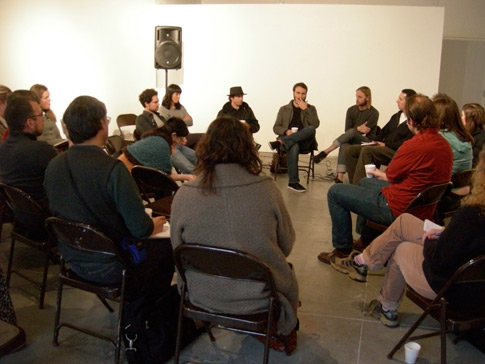 The Artist Respondents move front and center
The goal of the day was to get a bunch of people talking about issues like arts funding, government and the arts, the stimulus, the economy and what that means for artists, and interesting ways that all these areas may interact. This we accomplished. It is incredibly hard to get a bunch of artists and arts activists who already have an incredibly full work load together and come up with some immediate solutions to any problems, so we didn’t leave the meeting with a clear course of action, but I think that is ok. We’re still really early on, and just hearing out different ideas and perspectives is always fruitful.
I came away with a couple of things in particular though:
1. If artists want more money from government, they have to show up to meetings and prove themselves as a constituency and fight for what they want. They could team up with real estate brokers who know how artists turn areas from bad neighborhoods to desirable ones. They can fight for money in all aspects of government. Someone suggested that every single government project could have some sort of artistic element to it. Even if the budgets for this type of work are small, if these jobs are given only to Oakland (or whichever city you live in) artists, the impact could add up. Mike Bianco spoke about the possibility of starting a union. If a union charged some dues, maybe each locality could hire a lobbyist.
2. The stimulus for the NEA, in comparison to a lot of things, is still very small. Lori Zook, from the Oakland Cultural Arts and Marketing Division, suggested that we look not just to the NEA to get our hands on some stimulus money, but also through Education programs and Community Development Programs. She said there are billions of dollars being funneled into those programs. Now, this assumes that you’d have to fit your art into one of those categories, which is not always the easiest things to do. I was talking to my sister about grants and writing for them in general. Grant writers are incredibly adept at not necessarily fibbing about their projects, but just using the language and framework that the granters want to see. Perhaps we need to become creative in thinking of the ways that our work could be framed.
I was just talking to Joseph and he thinks this idea is a little bogus, as art should be funded because it is art and we and others should see the value in doing just that. I believe that, but it seems clear in this country that many policy makers do not believe that. So I’m ending at one of the very first topics/quandries of the discussion: how to make people understand, believe in, and fund art for its simple value as cultural capital.
The Artist Respondents move front and center
The goal of the day was to get a bunch of people talking about issues like arts funding, government and the arts, the stimulus, the economy and what that means for artists, and interesting ways that all these areas may interact. This we accomplished. It is incredibly hard to get a bunch of artists and arts activists who already have an incredibly full work load together and come up with some immediate solutions to any problems, so we didn’t leave the meeting with a clear course of action, but I think that is ok. We’re still really early on, and just hearing out different ideas and perspectives is always fruitful.
I came away with a couple of things in particular though:
1. If artists want more money from government, they have to show up to meetings and prove themselves as a constituency and fight for what they want. They could team up with real estate brokers who know how artists turn areas from bad neighborhoods to desirable ones. They can fight for money in all aspects of government. Someone suggested that every single government project could have some sort of artistic element to it. Even if the budgets for this type of work are small, if these jobs are given only to Oakland (or whichever city you live in) artists, the impact could add up. Mike Bianco spoke about the possibility of starting a union. If a union charged some dues, maybe each locality could hire a lobbyist.
2. The stimulus for the NEA, in comparison to a lot of things, is still very small. Lori Zook, from the Oakland Cultural Arts and Marketing Division, suggested that we look not just to the NEA to get our hands on some stimulus money, but also through Education programs and Community Development Programs. She said there are billions of dollars being funneled into those programs. Now, this assumes that you’d have to fit your art into one of those categories, which is not always the easiest things to do. I was talking to my sister about grants and writing for them in general. Grant writers are incredibly adept at not necessarily fibbing about their projects, but just using the language and framework that the granters want to see. Perhaps we need to become creative in thinking of the ways that our work could be framed.
I was just talking to Joseph and he thinks this idea is a little bogus, as art should be funded because it is art and we and others should see the value in doing just that. I believe that, but it seems clear in this country that many policy makers do not believe that. So I’m ending at one of the very first topics/quandries of the discussion: how to make people understand, believe in, and fund art for its simple value as cultural capital.
art and politics art market blog others lives TPG8
art and politics arts funding blog reblog TPG8
When it comes to funding for state arts agencies, California remains not-so-proudly ensconced in its customary slot — dead last — according to a report from the National Assembly of State Arts Agencies.
art and politics arts funding blog good things news TPG8
The nation’s 100,000 nonprofit arts organizations and their audiences generate $166.2 billion annually in U.S. economic activity. They support 5.7 million jobs and provide nearly $30 billion in government revenue. This economic stimulus will minimize the concern that ten percent of arts groups could close this year and helps save thousands of arts workers from losing their jobs.Hotly contested, called “pork,” “non-stimulative,” and “wasteful” by many republicans led by Sen. Tom Coburn (Oklahoma), Lynch’s statements (see audio recording below) bring into focus the true economic benefits of the arts in this country. This will be a big boon for the NEA and new arts projects. 40% of the money will be dispersed to existing state and regional arts organiztions and agencies and the other 60% will go towards funding new arts projects. (!) Robert Lynch presents the importance of the Arts to Congress













Lego Hello World
I wish all my printers were made of legos.
LIFE photo archive hosted by Google
Images from Life Magazine going back to 1860’s, hosted by Google
Coming Face To Face With The President
Well crafted story about an under-heard point of view.
In California, Pot Is Now an Art Patron
A new funding source for the arts – reaping big rewards and funding many projects. It’s pot.
Notes on Portraiture in the Facebook Age
Celebrity Book Club: A List to End All Lists
Because, well, it’s sortof awesome.
Are "Artists' Statements" Really Necessary?
The pros and cons about that nemesis for most artists.
This to That
You tell it what you’ve got and it’ll tell you what to glue them together with.
Work of art: Online store for buyers, sellers
Not the TV show! Kelly Lynn Jones from Little Paper Planes is interviewed on her project, gives us a cheat sheet to local affordable art resources.

