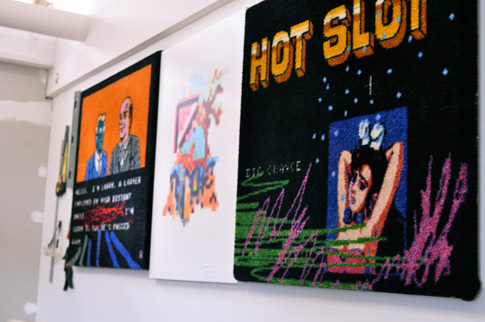
Interview with Matthew Cella and Studio Photos

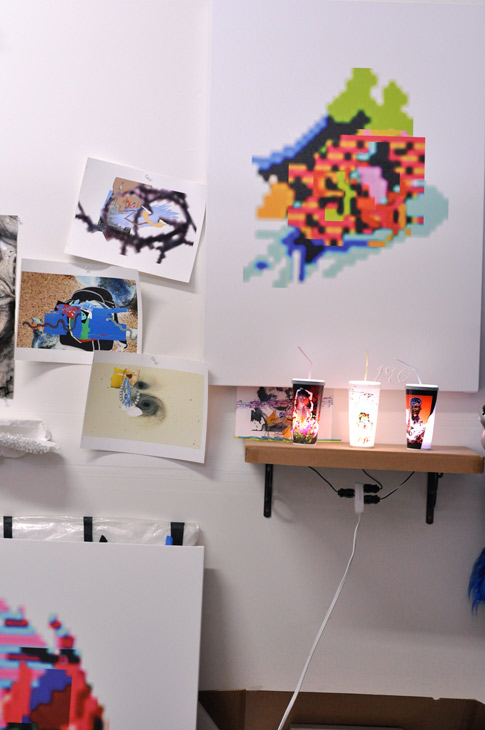
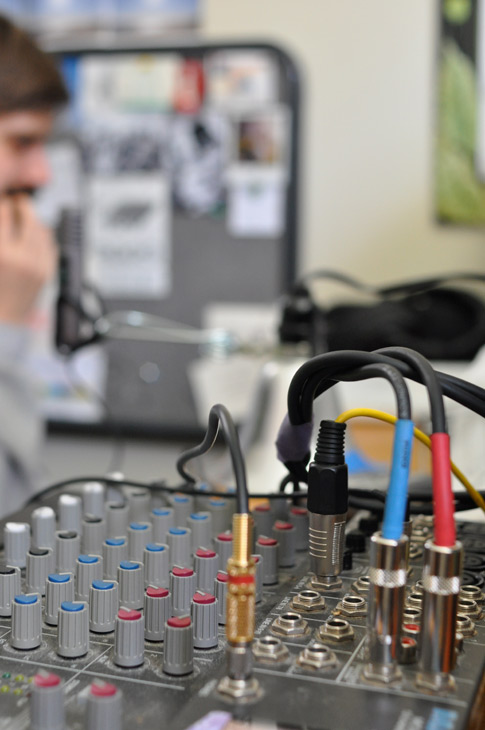
This interview was recorded on May 16th in Cella’s studio in San Francisco.

 
icon for podpress  #14 Interview with Matthew Cella [52:38m]: Play Now | Play in Popup | Download

In this interview we mention:

Jeff Koons
Marcella Faustini
Rob Burden
Tom Friedman
Takashi Murikami
Takeshi Murata
Devendra Bernhart

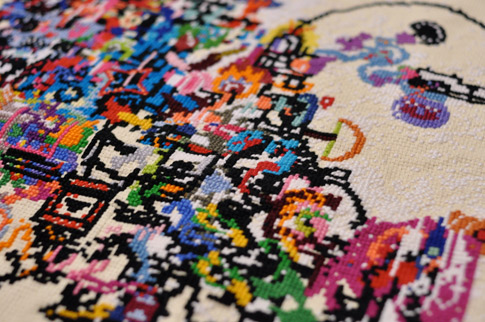
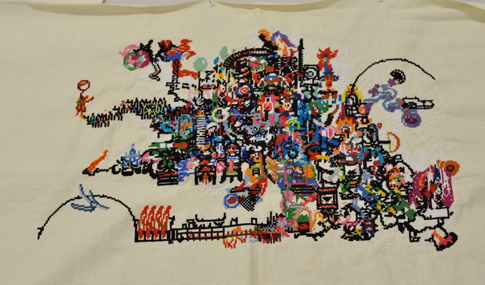
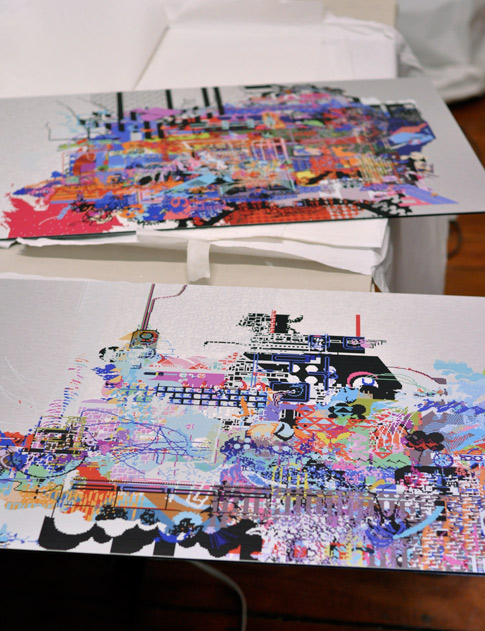
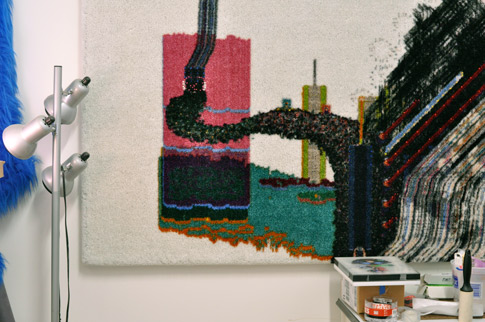
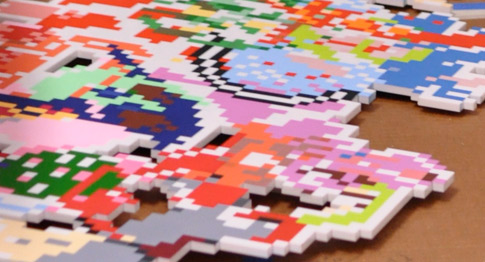
STUDIO TOUR!

studiocupssm

carpetssm

crossstitch-det_sm

crossstitch_sm

2metalworkssm

carpet2sm

plexi2sm

The Profession Project" class='title'>The Profession Project

Michael Zheng interviews his fellow classmates 5 years after their MFA.  He looks to find out what has changed for them, how they make a living, how they view art and the artworld.

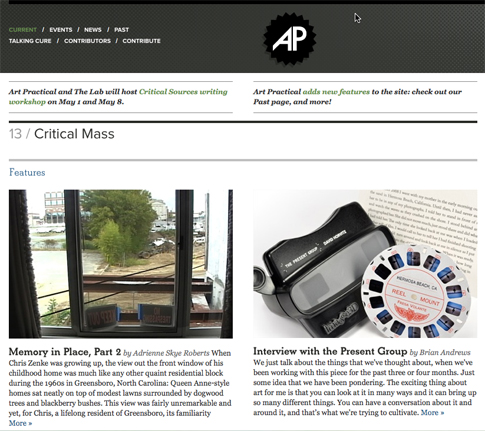
Bad at Sports/Art Practical interviews The Present Group

artpractical interviews The Present Group

We’re very excited and honored to have been interviewed by Brian Andrews of Bad at Sports and to show up in Art Practical.

Click Here to read the full interview

The audio version of the interview will be released on Bad at Sports on this Sunday 4/25.

Interview With Helena Keeffe

Helena Keeffe was interviewed on August 23rd, 2009 by Oliver Wise and Eleanor Hanson Wise of The Present Group.

Listen:

 
icon for podpress  Interview with Helena Keeffe - Part 1 [16:05m]: Play Now | Play in Popup | Download

 
icon for podpress  Interview with Helena Keeffe - Part 2 [22:48m]: Play Now | Play in Popup | Download

Interview with Stephanie Dean

Stephanie Dean was interviewed via Skype on May 13th, 2009 by Oliver Wise and Eleanor Hanson Wise of The Present Group.

Listen:

 
icon for podpress  Interview with Stephanie Dean [28:15m]: Play Now | Play in Popup | Download

TPG Interviews are now on iTunes

podcasting

Now you can easily stay up to date on our artist interviews, or explore our archives via iTunes.

Interview with David Horvitz

David Horvitz was interviewed via Skype on February 13th, 2009 by Oliver Wise and Eleanor Hanson Wise of The Present Group.

Listen: (~15:50) 

 
icon for podpress  Interview with David Horvitz [15:50m]: Play Now | Play in Popup | Download


Art world and professionalization

From Freize:

Over the last decades, the art world has become more and more professionalized. For an online-only survey, frieze asked 16 curators, writers and artists how they thought the languages, codes, education and business methods resulting from this process are affecting creative freedom. Is the art world too professionalized – or not enough?

View all 16 responses here:

Wassenaar: An internet photography magazine

From the people of We Can’t PaintWassenaar

wassenaar_winkelmann.jpg
photo: Andrés Marroquín Winkelmann

From the Editor’s Letter about Wassenaar:

Wassenaar is an Internet specific publication that focuses its curatorial eye on emerging photographers, photography books from established, independent, and self-publishers, as well as interviews conducted by bloggers. This simple formula, while structured much like a magazine, takes the ethos and subjective freedom of blogging by existing as both absent of commercial interests and free from a specific template. The ability to take risks in an online space means that the following issues of Wassenaar may only focus on a specific artist, type of photography, a single book, or even simply feature a collection of artist portfolios. In short, Wassenaar aims to be an online magazine that reflects its place within the web as an entity that continually evolves, never forgetting that this form publishing is indefinable.”


Interview with Maggie Leininger

Maggie Leninger was interviewed via Skype on August 26th, 2008 by Oliver Wise and Eleanor Hanson Wise of The Present Group.

Listen: (~32:00) 

 
icon for podpress  Interview with Maggie Leininger [36:07m]: Play Now | Play in Popup | Download

Interview with Aaron Cedolia

Aaron Cedolia was interviewed via Skype on May 20th, 2008 by Oliver Wise and Eleanor Hanson Wise of The Present Group.

Listen: (~27:00) 

 
icon for podpress  Interview with Aaron Cedolia [26:25m]: Play Now | Play in Popup | Download

Interview with Davin Youngs

Davin Youngs was interviewed via Skype on February 22nd, 2008 by Oliver Wise and Eleanor Hanson Wise of The Present Group.

Listen: (39:20) 

 
icon for podpress  Interview with Davin youngs [39:21m]: Play Now | Play in Popup | Download

.

Interview with Brian Stuparyk

Brian Stuparyk was interviewed via Skype on November 16, 2007 by Oliver Wise and Eleanor Hanson Wise of The Present Group..

.

Part 1 where Brian talks about the themes of authenticity and value in his art, a bit about his educational history (or lack there of) in art, and the Call to Entry that kick-started the Failure series: A show put on by Chester Costello entitled, “Something to do with Failure.” We also discuss how the process plays into the creation of his works and how these works interact with a viewer.


.

001stuparyk.jpg003stuparyk.jpg

.
Part 2 where we talk about his failure series, failing at failure, and the future: Trying, succeeding, and still failing. We talk about his experience at Cranbrook (“What does it mean to be an artist today? Failure and debt.”), his letter to Eric Fischl, more about “Conversation” as well as what’s brown and sticky.

Listen:


icon for podpress  Interview with Brian Stuparyk - Part 1 [14:04m]: Play Now | Play in Popup | Download

 
icon for podpress  Interview with Brian Stuparyk - Part 2 [12:55m]: Play Now | Play in Popup | Download

Interview with Christine Kesler

Christine Kesler was interviewed in Oakland, CA on August 24, 2007
by Oliver Wise and Eleanor Hanson Wise of The Present Group.

Listen: (20:25) 

 
icon for podpress  Interview with Christine Kesler [21:33m]: Play Now | Play in Popup | Download

Interview with Presley Martin

Presley Martin was interviewed in Berkeley, CA on April 22, 2007
by Oliver Wise and Eleanor Hanson Wise of The Present Group.

Listen: 

 
icon for podpress  Interview with Presley Martin [12:28m]: Play Now | Play in Popup | Download


Read:


Oliver Wise: Let’s start with a little bit of your background: how long you’ve been making art, and how you sortof came to it.

Presley Martin: I guess it started in college. I was a science major starting out. I gradually started taking more and more art classes in ceramics in particular, and art history too. And then I got frustrated, left school, and just tried to work as little as possible and pursued what I was interested in doing.

When I was working in Richmond I would ride along the bay on my bike. I started noticing the garbage washed up. I started collecting it. It was too interesting to pass up. So I started out with mostly plastic stuff. I was interested in the fact that you come out to a really natural area, but then you find brightly colored, perfectly round shapes. So I was collecting those when I started out.

I’ve always been interested in ceramics, and making some ceramic sculpture too. So when I first found the bricks, when I realized I could glaze them, it was an interesting way to sortof enter that process of things that get discarded and make it to the bay. Cause with the plastic, I was always thinking of if there was some way I could mark the plastic somehow. But then when I realized I could glaze the bricks, take them out of here, glaze them and sort of add another layer, insert myself into that process.

Yeah in general I’m interested in things that have had a use, and that people discard for whatever reason, or it blows out of their car. So I’m interested in a second life of these things that … when you’re done with your plastic water bottle, you usually don’t think about it, but it goes somewhere. So I guess the Bay was particularly interesting because it seems like it’s this huge collector for most of the people that live in the area. So anything that doesn’t go to the landfill, anything that escapes that stream, most likely will end up here.

Eleanor Hanson Wise: And isn’t that because a lot of the storm drains just wash right out into the bay?

PM: Yeah pretty much every storm drain just goes straight to the bay or straight to a creek that goes to the bay.

EHW: Do you view the bay itself as a sort of collaborator with you, with its own process of sorting and collecting?

PM: I guess. I mean not in a personal way. But it does.. Yeah, it definitely helps. Beause I used to collect just stuff off the street, mostly paper. But the bay definitely makes it easier, it concentrates things along the tide lines especially. That’s what I’ve found too, the different spots contain different things. Like here it’s the bricks, but at other places I haven’t really found any bricks. Other places have more plastic forks, or more gum, or you know…

EHW: What about photography, because you do a decent amount of photography as well, do you find that as sortof another way of collecting and organizing events or places or whatever, or do you see the photos as a more a work on their own?

PM: Not really, because I’ve never had any real formal photography training or anything. So I guess it has been another sort of collection. I do have a collection of found photographs, just ones I find on the street.

EHW: Seems like time is a big thing for you: progression through time.

PM: Yeah it is. It’s not actually something I really think about too much, but it always is an element. I guess it follows my natural rhythm of my life.

EHW: What do you mean?

PM: Well in terms of collecting stuff. For a while I just fit it in after work, or going to work, or whatever. So it’s always been on my scale. Whatever I could carry in my backpack on my bike.

But time, I’m definitely interested seeing how things change over time. With the bricks, I’m interested how the glaze is going to wear off, how the tide and the water is going shift them around. I put them in here and let the bricks in here and let the waves work on them is the same way as putting the clay and paper together and letting it work on its own.

But even with that stuff I’d like to get a sort of natural process involved. So I’d pour out liquid clay onto paper. So as the… when clay dries it shrinks, so it forms…the paper and the clay form together. So as they dry the clay shrinks, the paper tends to curl or buckle and then I, after it dries, extract them from the paper and fire them. And I guess in that way I tend to accumulate a bunch of those bits first and then make some sort of arrangement. You know I’ve done stuff where I ‘ve got a bunch of forks, and I have them in a progression from whole forks all the way down to single tines.

EHW: In a lot of ways your work could be compared to that of Richard Long, Smithson, or Goldsworthy. Do you see your work as a continuation of those Land Artists?

PM: Yeah, I really like their work, but I’ve always shied away from being that. They seem so serious. There’s like this purity that they strive for that just doesn’t really feel right to me. But I’ve always really been interested in the nature in the city. City parks. When I lived in Pittsburg, I was amazed that there were these beautiful parks. And you could go, just find a spot, and sit all by yourself. You’re in the city, but you can sit amongst the trees, and be totally by yourself.

EHW: Do you see your work as more performance based almost, or more as finished pieces, or are they more a thing that just doesn’t really have an end?

PM: Hmm. I never thought of it as performance until seems like four years ago. I took this class with this group of people and we were talking about presenting work and stuff, and it came up about my work that it was like this performance of going out and collecting and arranging this stuff. So since then I have thought about it more in that term, but it hasn’t really affected the way I do it.

So now I’m going to come back, over the next couple days, and see what’s going on. The performance of the elements. But I guess I had always had this notion of performance art in a gallery, you know Joseph Beuys living with wolf for a week or whatever.

I guess over the years I’ve been doing this, I feel like I’ve gotten more comfortable with it. And it’s more of who I am now, which is a pretty quiet person. So I’m getting, getting to that place, you know, of expressing who I am.


A Conversation with Ethan Ham and Benjamin Rosenbaum

This interview took place on February 19th, 2007 at 9PM EST in an internet chat room. It was conducted by Oliver Wise and Eleanor Hanson Wise of The Present Group.

Oliver Wise: Let’s start with a little history about the two of you. How did you come to meet and work together? Have you worked together in the past?

Benjamin Rosenbaum: Ethan and I met in the middle of a swordfight – in a cafeteria – on the campus of UCSC.

Ethan Ham: Ben was visiting a high school buddy of his who was a college buddy of mine…

BR: I believe it was an impromptu swordfight.

EH: Yep, I won…but I had taken fencing, so I had an advantage.

BR: I believe I was wielding a bamboo newspaper holder.

EH: Ambush really. Ben ended up recruiting me to work at his mom’s computer summer camp.

BR: The first place we worked together.

OW: Counselors?

EH: Yep… I learned to program in order to get the job.

BR: Yep. Ethan was very good at teaching the youngest campers Logo by bribing them with M&M’s.

EH: Hee hee.

OW: How did you come to collaborate on this project?

EH: I had been wanting to do a project with Ben for a while.

BR: Ethan called me up and said, “Hey, do you want to write some stories?”

EH: When I saw the call for proposals, I wanted to do something using the facial recognition software I had been playing with (and used on another project). . .

BR: I loved the Self-Portrait project.

EH: But it seemed too thin… So it occurred to me that this might be a perfect opportunity to work with Ben.

BR: We chat often about the different things we’re working on, but we hadn’t gotten to collaborate (or not since we were making video games in the 90s…).

BR: Ethan wanted to do the project based on what he called “anthopomorphs.”

OW: Ethan, maybe you could talk about “anthropomorphs” and “Anthroptic.”

EH: Well, I have another project where I’m using facial recognition to find people who the software identifies (incorrectly) as being myself.

BR: I called those “Almost-Ethans”.

EH: I noticed that the facial recognition software often identifies faces where there are none. Sort of like how humans see shapes in clouds.

BR: …”Almost-Faces”, or anthropomorphs.

EH: I found this so interesting that I wanted to make it the central concept of a project.

BR: I was initially unsure if that would work, actually.

Eleanor Hanson Wise: Why?

BR: I wasn’t sure there would be enough warmth or variety, if it were all pictures of, you know, logs that looked sort of like people, but Ethan talked me into it, especially after I started looking at the pictures.

EH: Yeah, you were worried about the human element being missing (by definition).

BR: Well, not really.

EH: No?

BR: Since in a lot of cases I “cheated.” No, you’re right. That is what I was worried about, but I mean, I picked several photos that actually do *have* faces even though the face is not the face the computer found.

EH: Yeah, bystanders’ faces…

BR: So that Tibor, Gustav, Istvan, and Vreeder are all actually shown…and Ostrich!

EH: Or in some cases faces that are faces, but aren’t human…

BR: Right. Ostrich and the rhododendron.

EH: The biggest cheat was Tibor & Gustav. :)

BR: Right

EH: Because it actually is a human face that the computer found–but the face is photograph within the photo, so technically it isn’t human.

BR: So it was a mixture of “pure” anthropomorphs like the flower and the city, and ones that actually did have faces in the picture.

OW: With the advent of photo sharing services like Flickr you find people posting very personal images to the public sphere, some of them probably thinking only their friends and family will look at them. But then this program comes along, and it searches methodically, without regard for social relationships or privacy. Ethan, you contacted all the owners of the photos you used. What were their reactions? Not only to being included in an art project, but to being located in this way?

EH: They all gave us permission… perhaps half of them were excited by the project (though I didn’t give them any details about it). None of them seemed too surprised about being contacted. All the photographers had Creative Commons their photographs, so they were all people who were inclined to share their artwork.

BR: In the Istvan and Sonia story I tried to suggest that there’s something a little sinister about this project… :-)

OW: Right, exactly. Maybe you don’t agree, but to me it seems like Flickr and Myspace have these sort of underbellies.

BR: Or just the internet in general.

EHW: People putting their whole lives on display.

EH: That’s true, though I think Flickr has a bit more air of innocence about it. I mean that my feeling is that a lot of people are using it to share their photos with friends & family, but not necessarily with quite the same exhibitionist flavor that other social spaces have.

BR: My daughter’s six, I think about things like the fact that her prom dates or high schools social rivals will have her baby pictures, etc., at their fingertips… I think the unintentional exposure is if anything sort of more sinister than on-purpose exhibitionism and posturing.

OW: Like we’re getting used to less privacy?

BR: You can still dig up Usenet posts I made back in the 90s, when Google was unimaginable.

EH: Yeah… I had to track down one of the photographers via Google searching him and poking around.

OW: Yeah, it all sticks around on the internet.

EH: I do occasionally cringe at the old postings I made that will never go away.

BR: I think part of the loyalty I see in Livejournal users, why they consider what they do distinct from blogging, has to do with the levels of privacy restrictions, etc.
BR (cont): The whole idea, in Myspace and LJ and so on, of “to friend” as a verb — internet culture now is a lot about exposure and concealment

EHW: What is LiveJournal?

BR: Another one of those social networking sites, which a lot of my writer friends like; and it distinctively has “friends-only” posts you decide who gets to see what; it’s (notably) not Google-searchable unless you choose it to be so.

OW: Ethan, one of the things that appealed to us about your project was how it combined new media aspects like the internet and facial recognition software, with the more traditional art forms of literature and book making. The same could be said of your E-Mail Erosion with sculpture. Maybe you could talk about that theme in your work.

EH: When I originally started doing art it was to get away from my day-job doing computer programming, so I tended to do very traditional hands on mediums. I started in clay, then stone, then bronze, then iron… at some point I realized I was working may way up the technological timeline.

EHW: When did you then jump ahead in time to the present?

EH: About my second year in graduate school…by then I was recovering from being burnt out on computers. I had seen a Roxy Paine piece (“PMU” I think) at the Baltimore Museum of Art and wanted to do something in reaction to it. So I began working on a generative art project that created digital paintings from user input–it was supposed to evoke arcade games. It’s my “Art 25 Cents” installation. Since then I’ve kept exploring generative art…sometimes using computers or electronics and sometimes using less technical materials. Usually even the technical pieces, as you point out, still have some more traditional, hands-on component.

OW: You guys made video games?

BR: Well, one video game. Computer game really — online strategy-fantasy game.

EH: We did. We actually helped co-found an internet game company (now defunct).

BR: Which was, I think, an important step for both of us in getting back to art. We’d been programmers for a decade.

EH: (I made more than one computer game–Ben moved on to more mature programming jobs)

BR: While making that game I started writing again seriously.

EHW: Was that how you (Ben) got into science fiction writing? Creating new worlds?

BR: Well, I had always wanted to be a writer as a kid, but I gave it up in college. So it was while working on the game that I decided to get back into it. There was a good bit of writing in the game — backstory, and also “flavor text.” Flavor text is an interesting form, because ideally you get a story across in a packet of 25-50 words which accompany, say, a magic spell in the game.

EH: My favorite was the flavor text for “Armor to Meat”–you wrote that, right?

BR: Right. . .Something like “Before, dwarves so tinny and unpalatable! Now can eat eight at a sitting!” — Ixbyl, Manticore

EH: Hee hee

OW: Is your game still online?

BR: Yes. http://sanctum.nioga.net

EH: Yes, when we closed the company we turned it over to a group of players to keep running as a non-profit.

BR: The company went the way of most tech startups of the nineties, but…  Ethan beat me to it.

OW: Ben, Could you explain the difference between speculative fiction and science fiction?

BR: Ah, a very interesting question. The subject of many religious wars. I guess the traditional and boring answer is that “speculative fiction” is an umbrella term encompassing “proper” science fiction, fantasy, horror, and other weird stuff. All of those categories actually break down when looked at too closely. In the old days, before commercial fantasy became the dominant genre and beat up its older brother, “science fiction” was used as a broad-church term meaning “any popular literature written (at least partly) for the thrill of strangeness, wonder, and ideas.” Nowadays people often use “science fiction” in a stricter sense, meaning something like “stories in which the reader’s pleasurable suspension of disbelief hinges on the impression that while this probably isn’t how the world works, it maybe *could* be” or even, more strictly still, “stories exploring the effects of (postulated future) technological change on society and human experience”

EH: Slipstream is the more narrow genre you might be categorized in…

EHW: Slipstream?

BR: Well, I think some of my stuff is really traditional, core, speculative SF and some of it is literary fabulism. Slipstream is another much fought-over term. A story of mine was just in an anthology called “Feeling Very Strange”, which was, I think, a pretty strong attempt to be a definitive “slipstream” anthology and it defined slipstream as “stories that make you feel very strange.” More or less, I guess what I would say is the term “speculative” fiction is a good one, for one kind of fantastic literature because you’re
“speculating”, you’re saying “what if?” What if aliens come and they don’t want to talk to us, because we’re at the wrong scale? Or even, what if someone bent Ethan’s Self-Portrait software to another, more private purpose.

EHW: What if rhododendrons domesticated humans?

BR: Right. But other fiction, that I write, while it’s strange in a way which perhaps attempts to thrill in the same way, it isn’t necessarily asking “what if?” The Tibor story, for instance, doesn’t really “speculate.” You can’t really get back to a “What if there was a Well of Miracles which did weird stuff to people and then there was this kind of flamboyant guy and… yeah.” It’s more a story built around a mood, an effect, a series of images than around a speculation, a logical exploration of an idea and you see this “non-speculative strange fiction” a lot lately, both inside the formally defined “science fiction” genre and in “high literary” fiction. My favorite examples being Kelly Link and Aimee Bender.

OW: It seemed to us that many of the stories dealt with themes of control, or lack there of. Events have unseen and unexpected causes. Flowers domesticating humans, the scene when Tibor and Vreeder are being compelled to talk to each other, and when you talk about how it wasn’t so much what Vreeder did, but what he let happen that led to his fame,. . . Is this your view of our fate?

BR: Hmm, well, I do think that our control over the world is contingent and unreliable, that the world is full of surprises, unintended consequences, and mysteries, and that we spend a lot of time fooling ourselves into believing we understand what’s going on, ever more, as we grow older, but I don’t think we are entirely without influence. We have some effect, and we are not excused from trying, just because we don’t know what we’re doing but I think epistemological arrogance is at the root of many of the things that bother me…I would like to unsettle everyone a bit, and make them less sure of their sureties.

EHW: Is that partly why you try to create stories that suspend reality or ask (as we were talking about)…what if?

BR: Yes, indeed. A lot of literature, but particularly speculative literature goes for an effect of “inevitable surprise” where you totally didn’t see something coming, but in retrospect you cant imagine how you could have missed it, and that’s an experience designed to make people look at things again, to get them to be willing to be surprised

EHW: Ethan, you sort of bring in those aspects to your work, like in the email piece where people want to see something happen.

EH: There’s a term for that in art Ostranenie (if I’m remembering my Russian), meaning something like “to make strange”

BR: Yes, maybe “estrangement.”

EH: A lot of my work offers the view the chance to impact the art, but not control the impact. So in the Email Erosion piece, a person can send an email that will have a determined effect, but the user/viewer can’t really direct how things are going to go

EHW: or where the work interacts with itself to degrade

OW: Impact not control.

EH: Exactly–impact but not control. The “Self-Portrait” and “Anthroptic” projects are a bit unusual for me because it didn’t really offer any user interaction (aside from posting photos to Flickr)

EHW: But really those people’s photos were collaborators, unknowingly.

BR: Unintentional collaborators! :-)

OW: One last question, what websites do you frequent?

EH: BoingBoing.net, edwardwinkleman.blogspot.com, portlandart.net, BBC news

BR: Hmm. I have been fighting a BoingBoing.net addiction for a while now. Strangehorizons.com. I use a bloglines.com feed to keep up with various ongoing google searches, peoples’ blogs.

EH: benjaminrosenbaum.com (though he doesn’t post to his blog often enough for my taste)� :)

BR: heh

BR: I am addicted to internet go and to several webcomics: megatokyo.com, sinfest.net, xkcd, cat and girl… It’s a bit of a golden age for web comics.

EHW: Well, we’d like to thank you two for all of your work and for taking the time to “talk” to us tonight.

BR: Thank you! It has been really lovely working with you guys

EH: Thanks, it’s been great working with Ben & you folks

  • TPG14
  • TPG13
  • TPG12
  • TPG11
  • TPG10
  • TPG9
  • TPG8
  • TPG7
  • TPG6
  • TPG5
  • TPG4
  • TPG3
  • TPG2
  • TPG1

Celebrity Book Club: A List to End All Lists
Because, well, it’s sortof awesome.

Are "Artists' Statements" Really Necessary?
The pros and cons about that nemesis for most artists.

This to That
You tell it what you’ve got and it’ll tell you what to glue them together with.

Work of art: Online store for buyers, sellers
Not the TV show!  Kelly Lynn Jones from Little Paper Planes is interviewed on her project, gives us a cheat sheet to local affordable art resources.

How to make a Daft Punk helmet in 17 months
whoa.

The Annual League of NH Craftsmen’s Fair - the Oldest Craft Fair in America
An amazing conglomerate of fine craft in Newbury, NH August 7th -15th.  Check out the show and say hi to my Mom in booth 406.

Wringing Art Out of the Rubble in Detroit
Detroit doesn’t cease to fascinate me.

New Media, New Modes: On 'Rethinking Curating: Art after New Media'
Nathaniel Stern takes a look at this new book by Sarah Cook and Beryl Graham, co-editors of the CRUMB site and list (the Curatorial Resource for Upstart Media Bliss

California Legal Requirements When Selling Multiples
Good to know

Congolese Dandies
Apparently there is a new trend in the Congo: gentlemen, in both appearance and action.  The Société des Ambianceurs et des Personnes Élégantes (SAPE), which roughly translates to a society of elegant people that have an ambiance about them, has a dress code restricted to 3 colors and encourages pacifism.